WILD BALD EAGLES
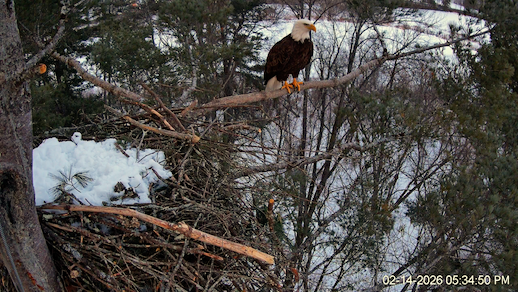
EAGLE CAM #1
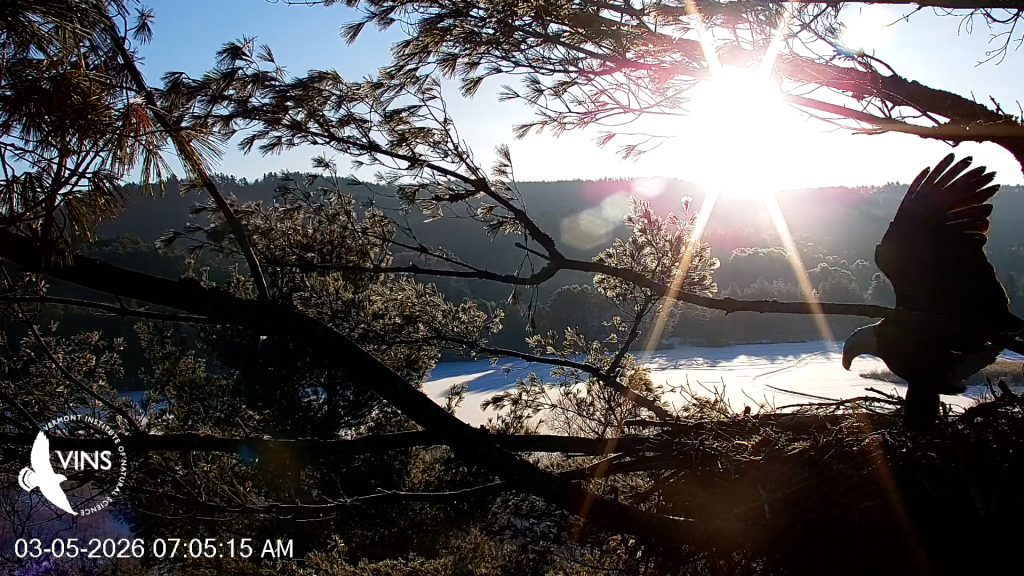
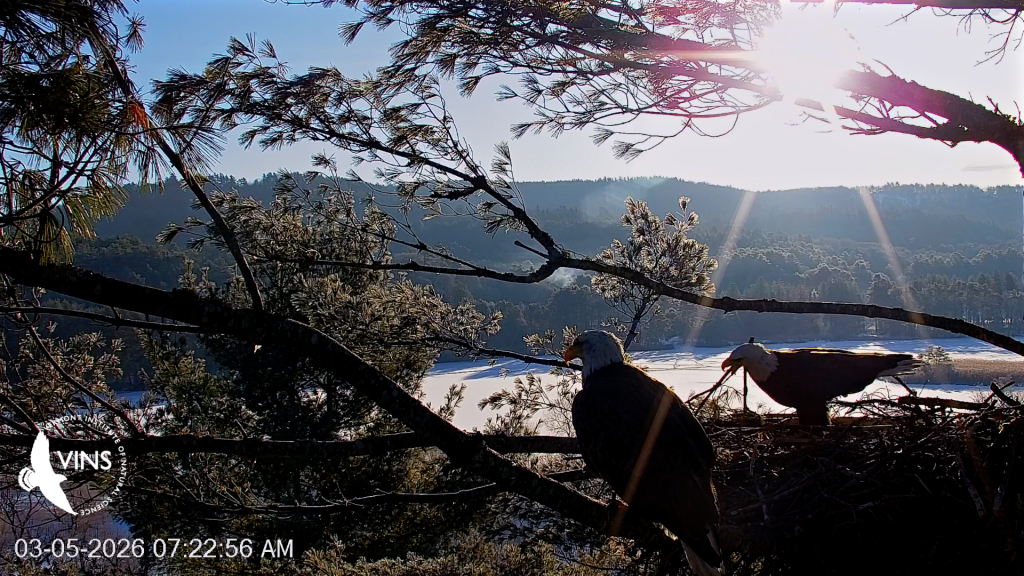
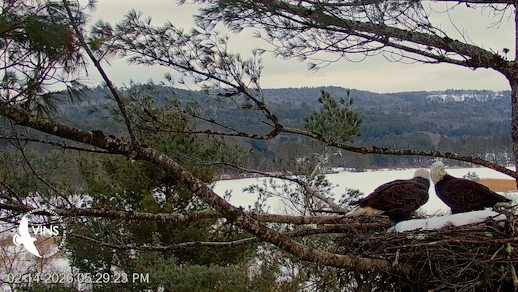
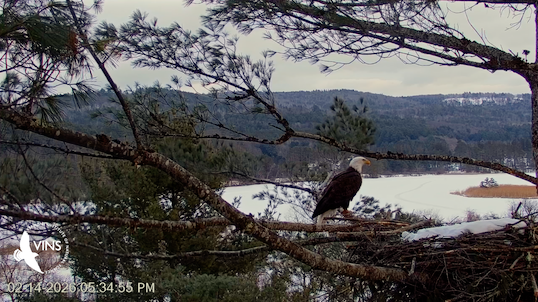
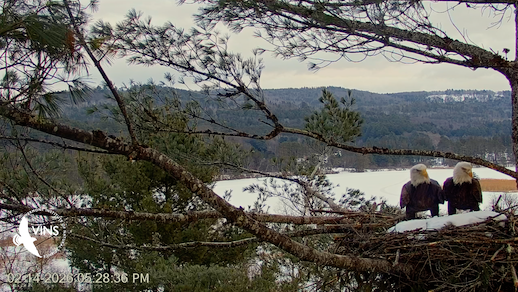
Sideview of the Nest Overlooking Dewey's Pond
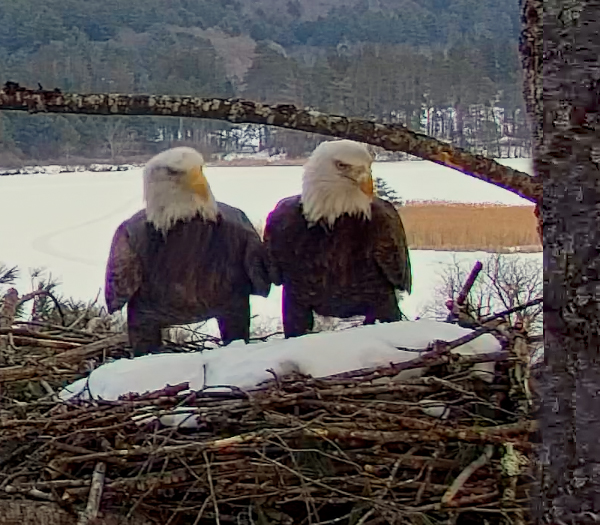
Eagle Cam #2
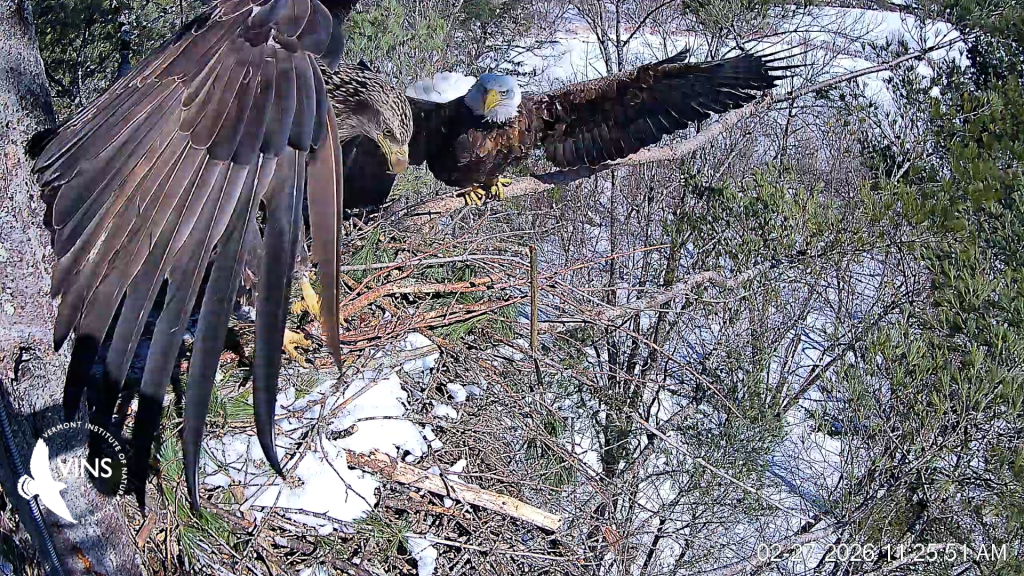
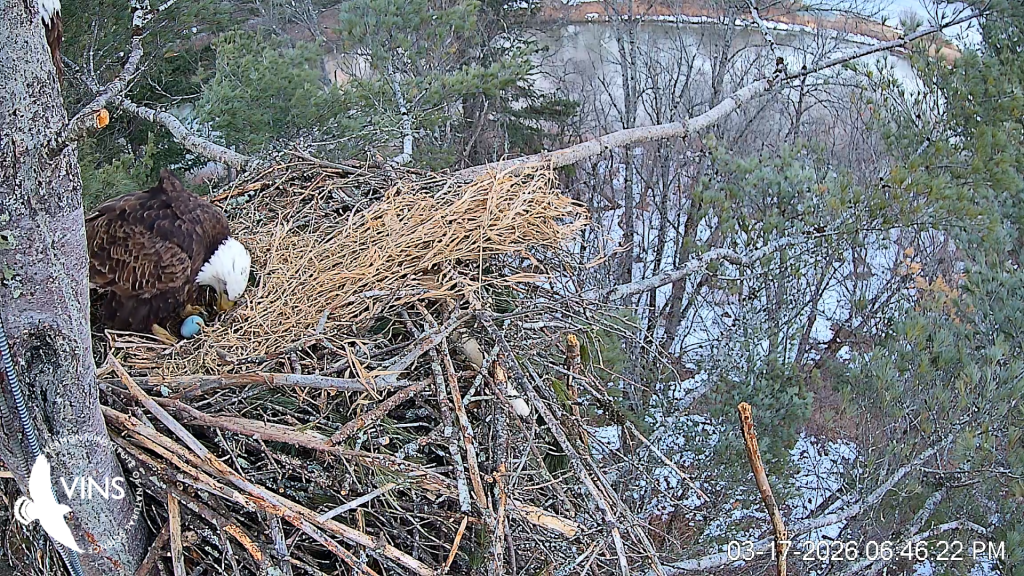
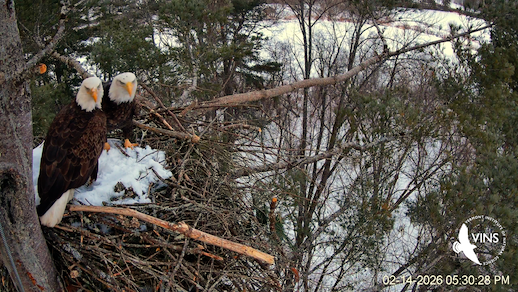
Overhead view
Don't see any eagles?
They're close by!
Nesting activity has already begun! We've observed the pair adding material to the nest, vocalizing to reinforce their bond, copulating, bringing food to the nest, and spending time close by.
Keep watching to catch the eagles on camera as they settle back into the breeding season.
Stay updated!
Receive exclusive updates on the latest nest activity and special moments from the Eagle Cam.
SEE SOMETHING WORTH NOTING?
Send us a screenshot at eagles@vinsweb.org
Our work is made possible through community support.
Donate to VINS today to support our work in education, research, and avian wildlife rehabilitation.
visit the vins nature center
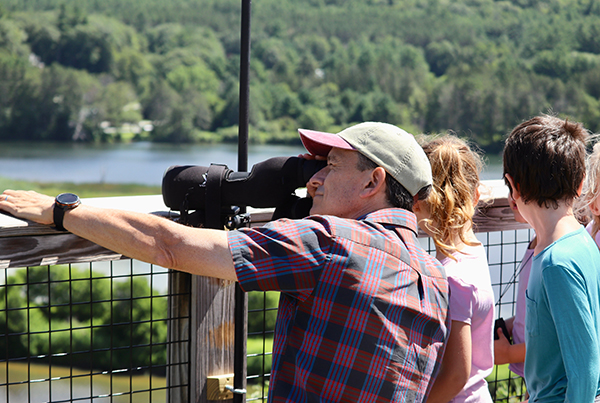
Starting this spring, you can view wild Bald Eagles from the top of the Tree House on the Forest Canopy Walk!
We'll have staff on-site at the top of the Tree House with a scope after our regular 11am program to help you spot the nest – a rare and inspiring glimpse into the life of these magnificent raptors.
NEST HISTORY
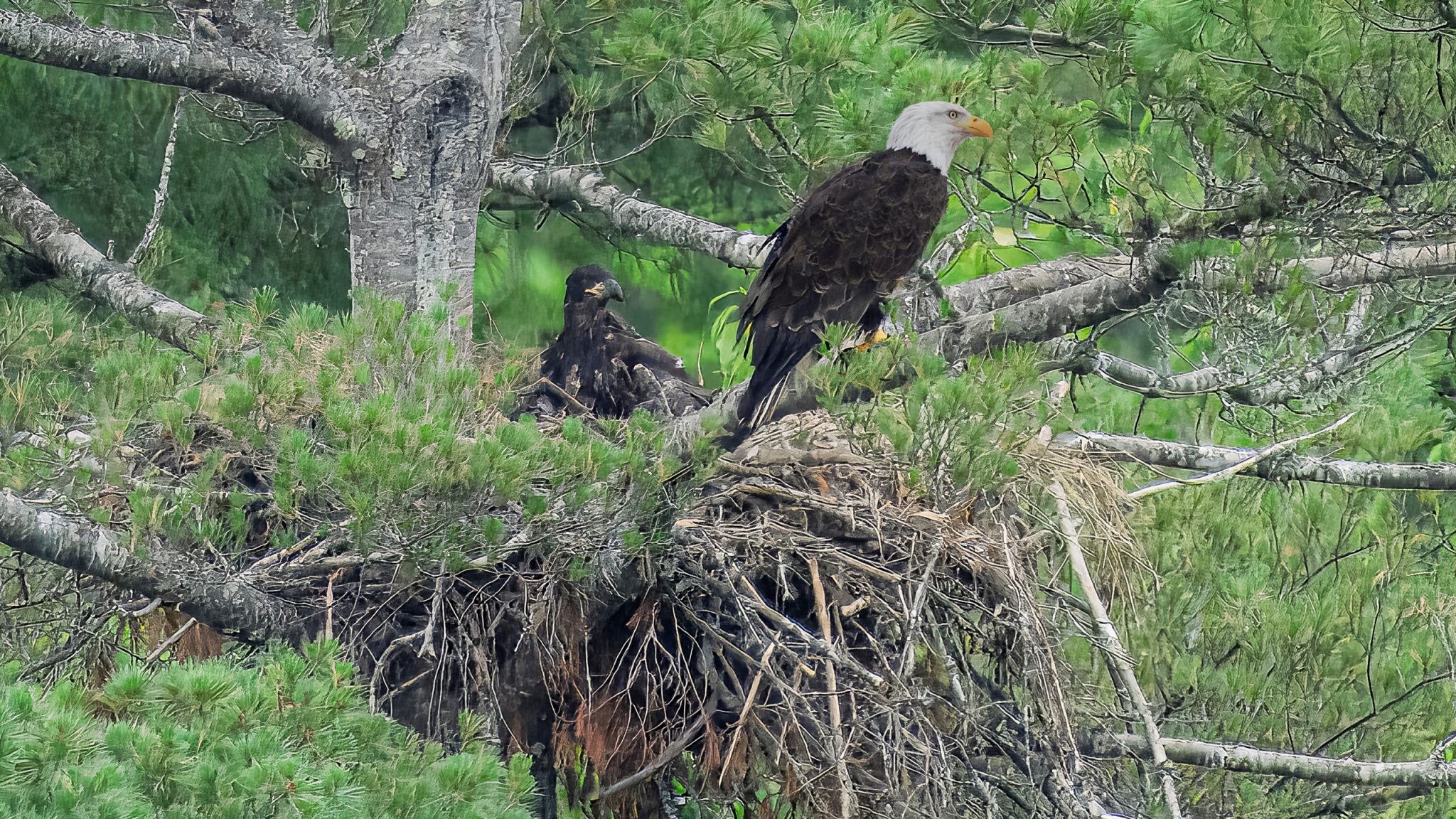
In 2025, VINS Researchers noticed a wild Bald Eagle building a nest on our campus. Watch the video below to learn about our experience last year.
FAQs
Where is the nest?
This nest sits 100 feet high in a white pine tree at the Vermont Institute of Natural Science in Quechee, VT, overlooking the Ottauquechee River.
What type of camera is being used?
There are two cameras on two different branches:
- Large Cam - Outdoor Rated Dahua PTZ Camera w/ Integrated Smart Infrared, 4MP Resolution (2560x1440), 25x Optical Zoom
- Small Cam - Outdoor Rated Dahua PTZ Camera w/ Integrated Smart Infrared, 4MP Resolution (2560x1440), Integrated Mic
- Both cameras have 4x Optical Zoom
How was the camera installed?
Mounting the Eagle Cams involved a collaboration among VINS staff, HDOnTap in Del Mar, CA, ArborScape in South Pomfret, VT, and NextGen Digital in Lebanon, NH to procure, arrange, and mount the infrastructure needed. While waiting for the Bald Eagles to make themselves scarce during the coldest stretch of winter, we painted and tested the cameras, built the solar array, and assembled the battery box. Once we found the right weather window in mid-winter, when no eagles were observed, the crew from ArborScape climbed the trees and mounted the cameras, radio link, solar panel, and conduit for the cables. Other helpful conversations about the project involved the staff at New Hampshire Audubon, The Vermont Department of Fish and Wildlife, and the US Corps of Engineers.
Does the night light/camera/etc disturb the Bald Eagles?
No. The cameras were installed between nesting seasons when the eagles were not using the nest. The glow you are seeing on the camera is infrared light, and is only detectable by the camera lens. Humans and eagles cannot see infrared light, but this allows us to view the nest at night.
What do Bald Eagles eat?
Bald Eagles typically eat fish, though they will also eat birds, small mammals, and roadkill. This nest is located right next to a shallow marsh, a river, and a pond, which should provide them with plenty of food.
Do Bald Eagles mate for life?
For the most part, yes. Both members of the pair tend to return to the nest site where they successfully raised young last spring, and so reunite with their former partner if they spent the winter apart (such as during migration). If one partner disappears for some reason, the other eagle will take a new mate.
How old are these Bald Eagles?
We do not know the ages of these eagles, other than they are mature adults, and therefore more than 5 years old. Bald eagles molt into their white head and tail feathers around age 5, and beyond this their age cannot be determined.
How long do Bald Eagles live?
In the wild, a bald eagle’s life expectancy is around 20 years. The oldest wild-living bald eagle on record lived to be 38! In human care, they can sometimes live for 50 years.
Are you going to band the adults/chicks?
Banding birds with an individually numbered ring on their leg is a common practice in ornithology to mark and study individual birds. Special permits are required to band birds for scientific study. In order to avoid unnecessary disturbance at the nest, banding nestlings is done only when scientifically warranted, and currently there is no specific study examining this group of eagles.
Are Bald Eagles endangered?
Bald Eagles were once endangered, but were delisted from the federal endangered species list in 2007, due to the success of many conservationists working to restore their habitat, and curb pollutants in the ecosystem. They were removed from the Vermont state endangered species list in 2022. Bald eagles are still protected under the Migratory Bird Treaty Act and the Bald and Golden Eagle Protection Act. Both laws prohibit killing, selling, or otherwise harming eagles, their nests or eggs.
How did we choose names for the Bald Eagles?
The VINS staff debated whether to name the eagles at all. In the end, we decided to name the pair of mature Bald Eagles in the same way that we name ambassador birds of prey at our Nature Center: after the places where they came from. Since many of our ambassador birds have been found locally, and rehabilitated, they bear place-based names such as "Woodstock," "Quechee," and "Hartland." In situations where a bird comes from the same town as another ambassador bird who already bears that name, we may name the new bird after its county or an important landmark nearby. Because the Bald Eagle nest overlooks Dewey's Pond in Windsor County, we thought "Windsor" (female) and "Dewey" (male) would be appropriate, place-based names. For ambassador birds at the VINS Nature Center, we try to remember that these animals lived full, wild lives before crossing paths with us, and we wish likewise to accord Windsor and Dewey as much freedom as possible from human influence. There is always a danger that by naming wild creatures we endow them with human characteristics, and our focus on education, rehabilitation, and research requires that we steer clear of anthropomorphism, as much as possible.